Memoirs Like Educated and The Glass Castle: What Readers Love About Them and Where Unbroken: LOTL Fits

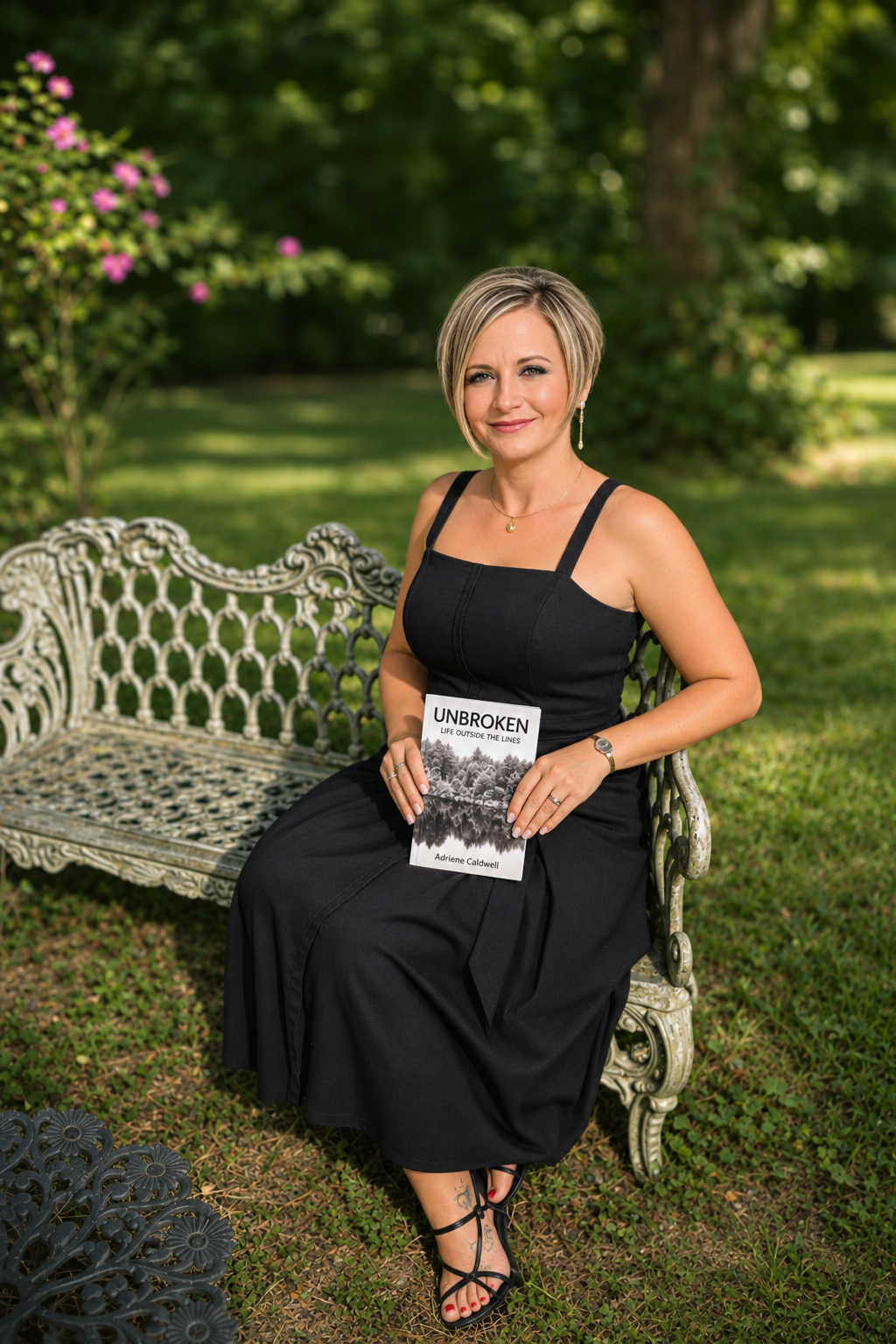
If you are searching for memoirs like Educated and The Glass Castle, the short answer is that you are looking for a specific thing: a first-person childhood account that is honest to the point of discomfort, a family structure that harmed the narrator, and a voice that earns your trust because it never performs. Adriene Caldwell's Unbroken: Life Outside the Lines belongs to that tradition. Kirkus Reviews rates it "Get it" and calls it "an emotionally raw, unflinching story of overcoming childhood abuse, neglect, and trauma." Early readers and reviewers have compared it directly to both Educated and The Glass Castle.
This piece explains what makes those two landmark memoirs so enduring, what they share beneath the surface, and how Unbroken adds a foster care survivor's voice to that conversation.
What Educated and The Glass Castle have in common

Both books are built on the same structural tension: a child who sees clearly inside a world adults have constructed around harm, and who must find a way out without a map. Tara Westover and Jeannette Walls both grew up in families where the people responsible for their safety were also the source of the danger. Neither book explains that dynamic tidily. The power comes from the child's eye view held steady across years of complicated memory.
Both authors also stay close to the lived moment rather than stepping back to interpret it for the reader. The result is that readers do the emotional work themselves, which is exactly why the books stay with people long after they finish. That restraint, more than any single dramatic scene, is what readers are really searching for when they type 'memoirs like Educated and The Glass Castle' into a search bar.
How Unbroken: Life Outside the Lines fits that tradition
Adriene Caldwell's memoir covers ground that neither Westover nor Walls entered: the American foster care system, the specific failures it produces, and what it costs a child to be passed through it. The book opens with the line "People don't expect bad things to happen to little girls who look like me: petite, with hazel eyes and baby blond hair. Maybe that's why the horror of my life went unnoticed." That opening establishes the same tension those two earlier books rely on: the gap between how a child appears and what is actually happening to her.
Publishers Weekly's BookLife says Caldwell "writes a manifesto ingrained in every page" and that her voice, "intimate and unsparing, brings her work beyond mere autobiography into social commentary." Readers' Favorite calls the prose "tough, hard, and uncompromising" and says the book "will give hope and possibility" to anyone who feels lost or alone. Reader Priscillah Bancy put it plainly: "Literally one would think that some of this is fiction because no one would want to believe that life can be this cruel. No one can accuse you of making anything up cause you got receipts."
What sets Unbroken apart from other memoirs in this space

One thing reviewers return to is verified, documented honesty. The Glass Castle and Educated were both questioned by some readers who found the events hard to believe. Unbroken carries the same quality of unbelievability, but reader Priscillah Bancy's reaction captures why it holds: "you got receipts." The Bookish Magazine, which named it The Bookish Reader's Pick and gave it The Bookish Award, notes that the book "confronts the question of the psyche's survival with brutal honesty, though never with gratuitous detail." That balance, honesty without exploitation, is precisely what readers of this genre are looking for.
Kimberly Christoffersen, who read the manuscript before publication, wrote: "I have not read a book that fast or thorough in a long time. It is well-written, honest, and heartbreaking all at the same time. In my opinion, your book has the potential of books like Educated and The Glass Castle." That comparison came from the reading experience itself, not from marketing language.
A checklist: how to tell if Unbroken is your next read
If you are deciding whether to pick it up after finishing one of those two books, these are the signals the book itself identifies as markers of its intended reader.
You are a survivor of childhood trauma, emotional abuse, family violence, or sexual abuse.
You grew up in or around the foster care system.
You found yourself in Educated or The Glass Castle and want a voice that speaks to a different but equally real experience.
You are navigating a healing and recovery process that does not fit neat timelines or inspirational soundbites.
You want to understand or support someone you love who is a survivor.
You are drawn to memoirs that hold space for the messy, nonlinear reality of healing rather than a tidy resolution.
What makes a memoir good?
The memoirs that endure tend to do one thing consistently: they stay inside the narrator's experience without asking the reader to approve of how the narrator survived it. A good memoir does not tidy up the people in it, does not resolve ambivalence prematurely, and does not trade the reader's trust for their sympathy. It earns both by being specific about the moments that shaped the narrator, even when those moments are hard to hold.
For readers of childhood trauma memoirs in particular, a good memoir also resists the urge to perform resilience. The most honest versions of these stories acknowledge that survival is not the same as living in truth, and that the distance between the two can take years to cross.
What makes a memoir compelling?
Compulsion in a memoir comes from voice before it comes from plot. Readers of Educated describe being unable to stop because Westover's voice made them feel they were inside her uncertainty in real time. The same quality appears in reader responses to Unbroken: Priscillah Bancy wrote "I inhaled this book and didn't want it to end," and Danielle Cabral noted "a compelling voice that draws the reader into the depth of your experiences."
Specificity is what creates that pull. A narrator who names the exact feeling, the exact room, the exact thing that was said, gives the reader nowhere to hide from the experience. Generality lets readers keep a comfortable distance. The memoirs that people recommend after finishing, the ones that prompt searches like this one, are almost always the ones that refused that distance.
What makes a memoir stand out?
In a crowded genre, the memoirs that stand out tend to bring a perspective that has not been fully heard before. Educated brought an isolated fundamentalist upbringing into the mainstream conversation. The Glass Castle brought itinerant poverty and a charismatic, destructive father. Unbroken brings the foster care system and the particular silence that surrounds children whose suffering is invisible precisely because they do not look like they are suffering.
Publishers Weekly's BookLife makes this point directly, noting that Caldwell's "journey from a child discarded by circumstance to a woman forging purpose feels like a triumph wrested from the jaws of despair" and that her work moves "beyond mere autobiography into social commentary." That social dimension, the way a single life illuminates a systemic failure, is often what elevates a memoir from personal story to lasting literature.

Where to find Unbroken: Life Outside the Lines
Unbroken: Life Outside the Lines is available on Amazon and at all major book retailers. The prologue can be read on the author's website. The book is intended for readers over 18, and it does not pull punches: readers who are easily triggered should bear that in mind before beginning.
It is not a guide and not a quick fix. As the book itself describes its purpose: a companion for the parts of the journey that are quiet, complicated, and real.

Comments