A Trauma Memoir for Social Workers: Pairing Clinical Learning With a Survivor's Own Account

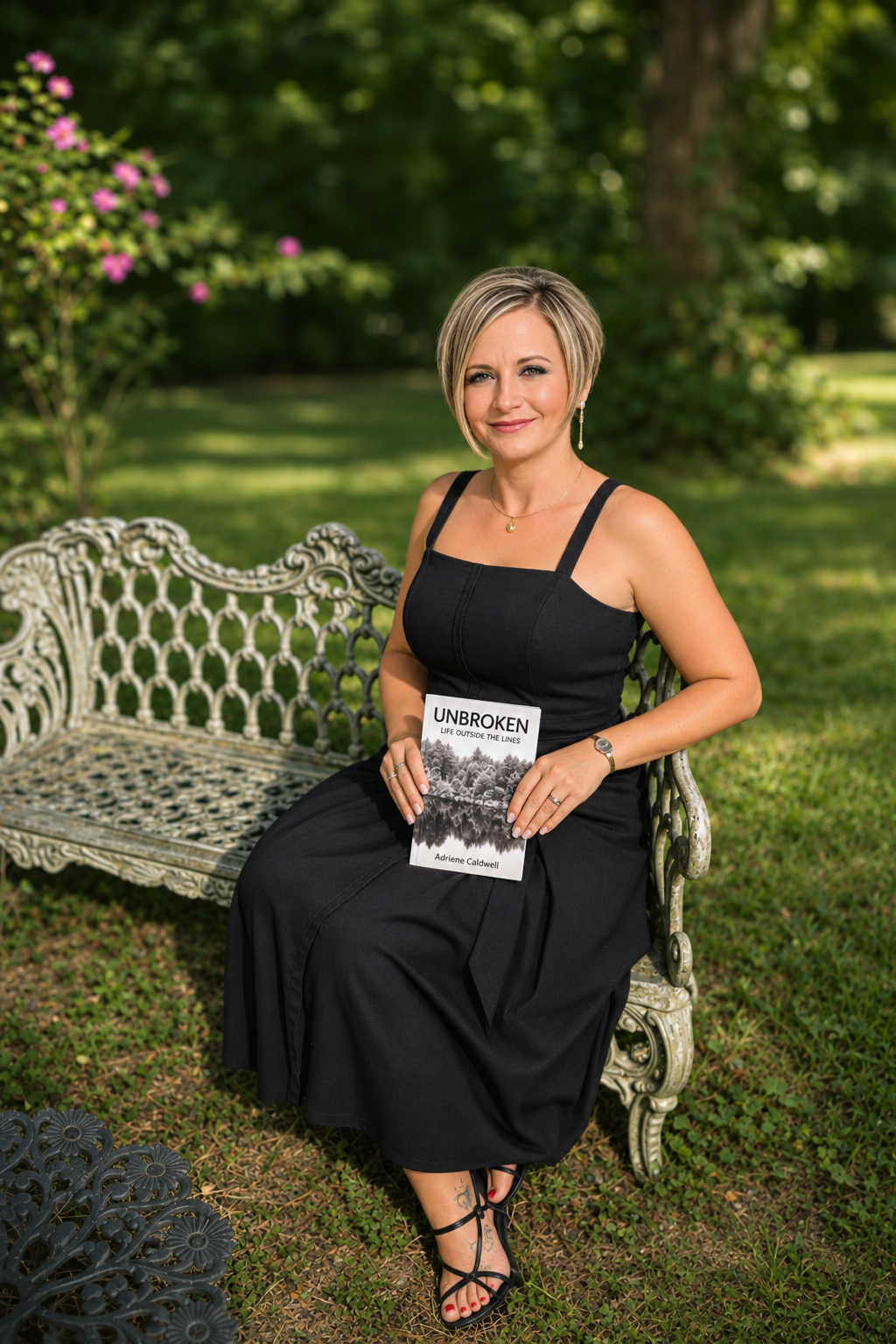
When you are building a course or a reading list around childhood trauma, a clinically sound memoir can do something a textbook cannot: it shows the reader what the diagnostic language actually felt like from the inside. Unbroken: Life Outside the Lines by Adriene Caldwell is a coming-of-age memoir covering childhood abuse, neglect, sexual assault, and traumatic foster care, reviewed by Kirkus Reviews, Booklife/Publishers Weekly, and Readers' Favorite, and grounded in documented, verifiable experience. It is the kind of primary source that pairs with clinical texts rather than replacing them.
Social workers, counselors, and psychiatric nurses regularly report that trauma education tends to arrive as either a clinical framework or a personal story, rarely both at once. This article explains what the book covers, how it has been received by people in professional training, and how educators and students can use it alongside clinical learning.
What the book covers and why verification matters

Unbroken: Life Outside the Lines follows Adriene Caldwell from childhood through the failures of the American foster care system, covering physical abuse, sexual assault, neglect, and untreated parental mental illness. From the earliest pages, Caldwell takes responsibility as the only stable figure her baby brother Joshua could rely on after their mother became increasingly unstable. That dynamic, a child absorbing a parenting role to compensate for an absent or harmful caregiver, is one that social workers encounter in caseloads regularly.
What sets the memoir apart in a training context is its verified authenticity. Readers, including Priscillah Bancy, have noted that "no one can accuse you of making anything up cause you got receipts." Kirkus Reviews rates it "Get it" and describes it as "an emotionally raw, unflinching story of overcoming childhood abuse, neglect, and trauma." Booklife/Publishers Weekly calls it "a searing, courageous memoir of rising above generational and systemic trauma." That layer of editorial review matters when you are recommending a text for professional development or formal coursework: students need to trust that what they are reading reflects lived reality, not a dramatized account.
The gap professionals describe

Mental health professionals, counselors, and social workers consistently report that the resources available to them sit at one of two poles: clinical literature that maps the neurobiology and behavioral patterns of trauma, or personal narratives that offer emotional resonance without the conceptual scaffolding that training requires. Very few resources pair both. A memoir that is unflinching about the specifics of systemic failure, parental mental illness, and institutional neglect, while also being precise enough to anchor clinical discussion, fills that gap in a way neither pole can on its own.
Educators designing field practicums, pre-service training modules, or graduate reading lists often find themselves combining multiple texts to achieve what a single well-chosen memoir can provide. Unbroken: Life Outside the Lines has engaged readers in exactly that way, as the response from an intern in a psychiatric nurse practitioner program illustrates.
One intern's experience
April Gonzales, an intern in the TTUHSC Psychiatric Mental Health Nurse Practitioner graduate program, reached out to Adriene Caldwell directly after engaging with her story: "I just wanted to tell you thank you again for sharing your story with me. It truly helped me decide the path I want to take as an NP."
That kind of response points to something a clinical case study rarely produces: a shift in professional identity. Reading a first-person account of what it costs a child to survive an abusive family and an indifferent foster care system does not just inform a student about trauma. It can clarify why the work matters and, for some students, which part of that work they are called to do. For educators, that is a meaningful outcome alongside the clinical learning goals.
How does childhood trauma affect behavioral health in adulthood?
Childhood trauma, particularly ongoing abuse, neglect, or household dysfunction, is associated with a wide range of behavioral health outcomes in adulthood. These include difficulties with emotional regulation, challenges forming secure attachments, heightened stress responses, and increased vulnerability to anxiety, depression, and substance use. When a child's early environment is unpredictable or threatening, the nervous system adapts to manage that threat, and those adaptations do not simply switch off when the child grows up.
What a memoir like Unbroken: Life Outside the Lines can show, in a way a symptom checklist cannot, is how those adaptations look from the inside across years of a person's life. Caldwell's account of assuming responsibility for her brother, navigating foster placements, and surviving repeated harm gives students and professionals a continuous human narrative to set alongside diagnostic frameworks. Booklife/Publishers Weekly describes the memoir as illuminating "what refuses to break within," which is precisely the kind of resilience factor that behavioral health professionals also need to understand, not only the pathology.
How does childhood trauma manifest in adults?
In adults, the effects of childhood trauma can be subtle or easily misread. A client's fawning behavior, difficulty setting boundaries, compulsive caretaking of others, or apparent emotional flatness may trace back to survival strategies developed in childhood, not to personality traits or deliberate choices. Social workers and counselors who understand those origins are better placed to respond without inadvertently reinforcing shame.
Reading a detailed first-person account of how those patterns form in real time, as Caldwell's memoir provides, can sharpen a practitioner's ability to recognize them in a client. The specificity of the memoir matters here: Caldwell does not generalize. She recounts scenes and decisions at the level of lived detail, which is what allows a reader to draw connections to the presentations they will encounter in practice.
A practical checklist for educators considering the book
If you are evaluating Unbroken: Life Outside the Lines for a training program, a graduate seminar, or a professional development reading list, the questions below can help you decide whether it fits your learning goals. Note that the book carries an adult content disclaimer and is intended for readers over 18; it is explicit about abuse and trauma, which is appropriate for professional training contexts but worth flagging for participants.
Does your program need a primary source that illustrates foster care system failures from a child's perspective?
Are students learning to recognize how parental mental illness and domestic abuse interact within a household?
Would a continuous narrative arc (rather than a case vignette) help students follow the developmental impact of trauma over time?
Do you want a text with editorial reviews (Kirkus, Publishers Weekly) that students can cite as a verified account?
Is the goal to help students connect clinical concepts, such as attachment disruption or hypervigilance, to a lived human story?
Would you benefit from a text that models survival and meaning-making alongside documentation of harm?

A hypothetical discussion module
Consider a graduate social work seminar built around a module on childhood trauma and systemic failure. Students read two or three chapters of Unbroken alongside a clinical reading on adverse childhood experiences. The seminar then opens with a question drawn from the memoir: at what point did the systems that were supposed to protect this child fail her, and what would a different intervention have required? That question is both clinically grounded and personally specific, which tends to produce more considered discussion than a hypothetical case study built from generic details.
A second session might focus on the survivor's own account of what helped and what did not, inviting students to identify the informal protective factors Caldwell describes and map them against formal resilience frameworks. The goal is not to treat the memoir as a clinical text, but to let it do what a clinical text cannot: hold the reader inside a single person's experience long enough to build genuine comprehension rather than categorical knowledge. Unbroken: Life Outside the Lines by Adriene Caldwell is available now. Get your copy today: https://www.amazon.com/dp/B0GSLDBNN7


Comments